
Duty as Self-Command
The Good ShepherdThis flow examines how George Krause’s ideal of duty helps him act decisively while also driving him to distrust ordinary human needs.
increasing Bearing strength in each event
 decreasing
Bearing strength in each eventdecreasingA Body for Duty
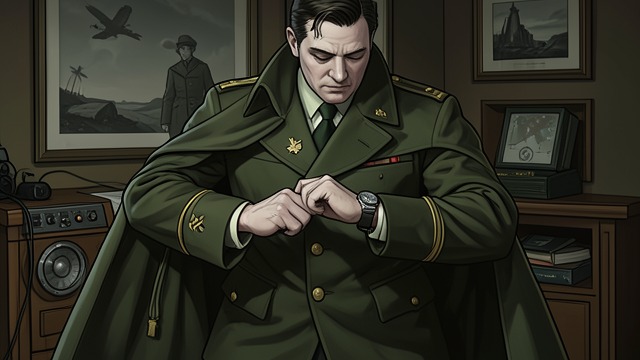
A Body for Duty
Impersonal self-regard
George Krause regards his body as an instrument for carrying out his orders. He can turn from prayer to an emergency in seconds because he has trained himself not to treat personal comfort as the first concern.
A disciplined routine
Inspection, prayer, dress, and watchkeeping give him a sense of order amid the instability of the sea. His repeated habits help him begin again after each interruption.
The hidden cost
The same attitude makes him slow to recognize cold, hunger, and exhaustion. Duty sustains his command but also encourages a dangerous belief that physical limits can simply be overruled.
Comfort as Temptation
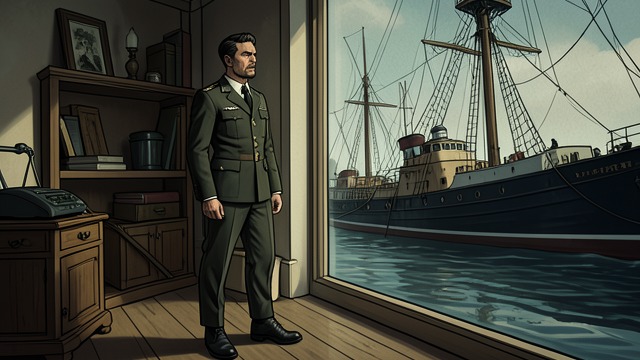
Comfort as Temptation
Reluctance to sit
George Krause repeatedly views sitting down, removing his shoes, and drinking more coffee as suspicious indulgences. Even when his feet ache and sleep threatens his judgment, he treats relief as a test of character.
Discipline under strain
He forces himself to remain standing and thinking while Keeling patrols the damaged ships. The effort keeps him awake for a time but cannot prevent him from nearly collapsing.
A flawed measure
George Krause’s self-command is essential in battle, yet his distrust of his own needs can impair the command he means to protect. The novel presents endurance as both strength and a danger when it becomes self-punishment.
Learning to Accept Help
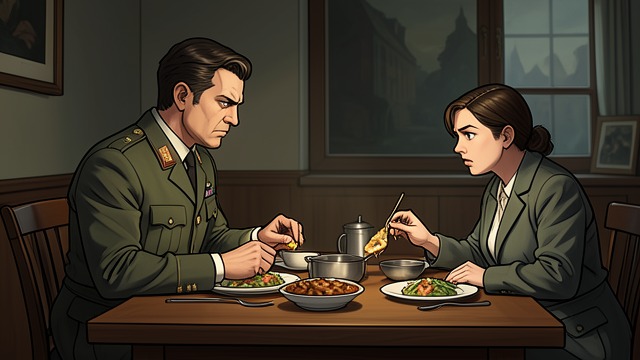
Learning to Accept Help
Care from a subordinate
Charlie Cole arranges food and presses George Krause to eat, while the crew prepares for the burial of their dead. The captain’s private needs become impossible to separate from the ship’s ability to function.
Authority and dependence
George Krause accepts Cole’s help without surrendering command. He remains responsible for the service and orders, but no longer has to pretend that leadership makes him self-sufficient.
A limited adjustment
The meal and the burial give him brief support, not recovery. By the time the convoy reaches relief, he still cannot continue without sleep, revealing that duty is carried by human beings rather than by a perfect instrument.
Wednesday morning after George Krause leaves his cabin
Thursday night while Keeling guards Cadena and Viktor
Friday morning after Charlie Cole arranges breakfast
